
A prediction you can't audit is a guess.
Quality, emissions and equipment-health prediction from the instruments you already have.
Data-driven decisions with predictive analytics
Our predictive analytics services use machine learning on your historical data to uncover trends and forecast future outcomes — taking the guesswork out of decision-making across operations, energy and manufacturing.
Our data scientists work closely with your team to deliver customised, actionable models: optimise operations, reduce risk, allocate resources effectively and act on new data the moment it arrives.
- Robust across data types and scalable to very large datasets
- Interpretable, transparent models you can audit and trust
- Automated feature selection and real-time predictive scoring
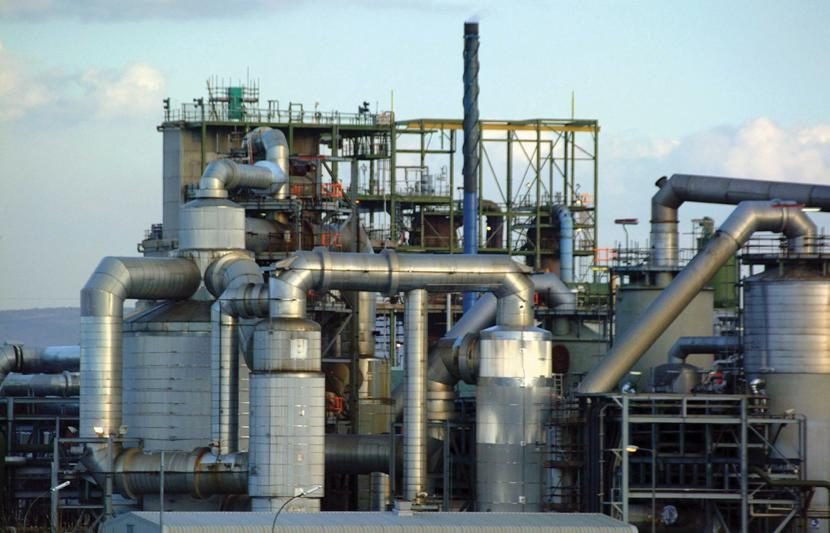
Pick the inputs. The model refits, honestly.
A column's product quality against four candidate inputs, from 300 historical samples. Toggle inputs on and off: an ordinary least-squares model refits in your browser on the training split and is scored on the held-out lab samples. Feature importance and the error in your units update with it.
- Real least-squares fit, train/test split
- Accuracy on held-out lab samples, in your units
- Importance shows which tags actually carry the signal
Inside this service
Inferential measurement of quality, composition and emissions.
Degradation flagged with lead time to plan work.
Production, utility and network demand ahead of time.
Predictive emissions monitoring from process data.
End-of-batch quality predicted mid-run.
Response surfaces for operating decisions.
What you actually get
Validated against your lab
Every model is benchmarked against your lab reference before go-live, and the accuracy is reported in your units.
- Trained on historian and LIMS data
- Accuracy reported vs lab reference
- Confidence bands on every estimate
Real-time, not batch
Estimates update every few seconds on plant-side hardware and publish like any other instrument.
- Updates every few seconds
- Runs on plant-side hardware
- Publishes via OPC UA tags
Transparent models
You get feature importance, drift alarms and a retraining plan — not a black box.
- Feature importance reports
- Drift alarms configured
- Retraining plan at handover
Predictive methods we apply
| Method | Question it answers | What you get |
|---|---|---|
| Regression | How does X depend on Y? | Relationships, sensitivities, what-if response |
| Time-series forecasting | What will demand, load or quality do next? | Horizon forecasts with confidence bands |
| Classification | Which category is this event, asset or record? | Labels with probabilities |
| Anomaly detection | Is this normal? | Deviation scores, ranked contributing tags |
| Transfer learning | Can we start before we have years of data? | Pre-trained models adapted to your unit |
| Real-time scoring | What is the estimate right now? | Live values to dashboards, alarms, DCS |
 NumPy
 pandas
 scikit-learn
 TensorFlow
 PyTorch
Tag coverage, sampling and gaps assessed.
Process knowledge encoded with your engineers.
Candidate models compared on your data.
Benchmarked against reference measurements.
Published as tags, monitored for drift.
“A prediction you cannot audit is a guess. Every model ships with accuracy in your units and confidence bands.”
SMHcoders · method
Free 45-minute consultation with an engineer: bring one problem, leave with a feasibility read.
How accurate are the predictions?
Accuracy is reported in your units, benchmarked against your lab or reference data before go-live — with confidence bands, not a single opaque score.
What data do we need to start?
Most engagements start with 6–24 months of historian, lab or document data. We audit coverage in the first week and tell you plainly if it is not enough — before you commit.
How long until we see results?
A proof of concept on your historical data typically lands in 4–8 weeks. Production deployment follows once the KPI target is met and your team signs off.
Where does it run, and who sees our data?
On your infrastructure — plant-side servers, your Azure or AWS tenancy, or an air-gapped network. Data never leaves your boundary, and nothing is used to train third-party models.
Who owns the result?
You do. Handover includes source code, documentation, training sessions and a retraining plan.